


- Let sulfuric acid learn to be within reach - Cultivate sulfuric acid engineers starting from the digital sulfuric acid simulation system (2)
Preface
When industrial production meets digital simulation, and when high-risk practical operations shift to virtual safety drills - a transformation concerning efficiency and safety is quietly unfolding.
Currently, the chemical industry is generally confronted with four major challenges: difficulties in operation training, high risks in practical operations, high costs in process optimization, and insufficient experience in emergency handling. The traditional "apprentice learning from a master" model is inefficient and has a narrow coverage, making it difficult to cope with the ever-changing working conditions. The cost of trial and error in on-site practical operations is extremely high - whether in daily operation or the initial stage of new equipment commissioning, if operators are not familiar with the dynamic characteristics of the process, interlock logic, or abnormal working conditions, it may lead to unplanned shutdowns at best, and equipment damage or even safety accidents at worst.
Nowadays, experience can be accumulated and knowledge can be perpetuated. Based on the actual process model of the sulfuric acid plant, we have constructed a high-precision digital twin system that supports full-process simulation of scenarios such as start-up and shutdown, load adjustment, and fault handling, achieving a deep integration of digital simulation technology and industrial reality. Operators can practice various working conditions in a virtual environment, verify the rationality of operation logic and parameter settings, and enhance their emergency response capabilities. To ensure the accuracy of the digital twin system simulation and its dynamic synchronization with the actual equipment, we will regularly calibrate model parameters and integrate real-time operation data, enabling operators to grasp the health status of the equipment in real time through the virtual interface, predict potential faults, and formulate maintenance plans in advance.
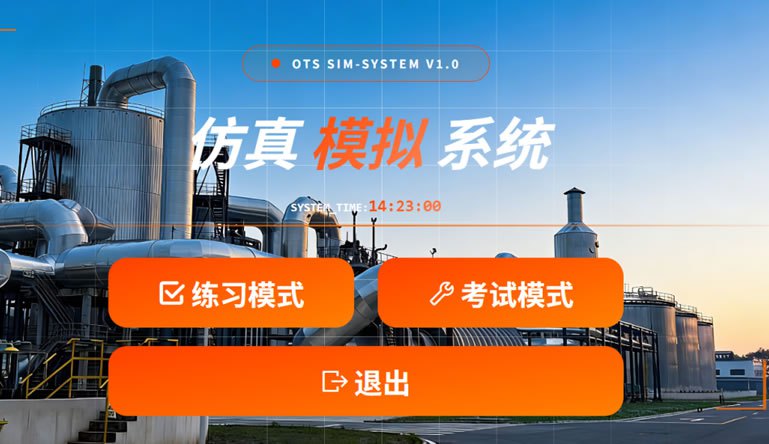
Preview of the OTS Simulation System
Our self-developed OTS simulation system fully takes into account the real needs and operation habits of different user groups, and is committed to creating a more user-friendly and smooth interaction experience. For beginners in the sulfuric acid industry, the interface design is simple and intuitive, combined with visual operation steps and corresponding prompts, greatly reducing the learning cost and threshold; for operators familiar with the process flow, the system is highly consistent with the actual operation logic of the factory, helping them to seamlessly connect and work efficiently. (The picture shown is for reference only and does not represent the final online effect.)
In terms of interface design, the system supports 1:1 replication of the entire process DCS screens and high-fidelity dynamic simulation.
- We offer full-process OTS screen drawing services for sulfuric acid plants: it can not only 100% replicate the existing DCS screens to maintain operational habits but also restructure the interface specifically to achieve an upgraded experience, ensuring both training and production processes are efficient and intuitive.
- Pipes are distinguished by the medium they carry through color and supplemented with different thickness styles to ensure clarity at a glance. Under the premise of maintaining a unified overall interface style, the system achieves seamless data integration across multiple interfaces, maximizing the restoration of real working conditions and ensuring that the simulation process closely resembles the actual process flow.
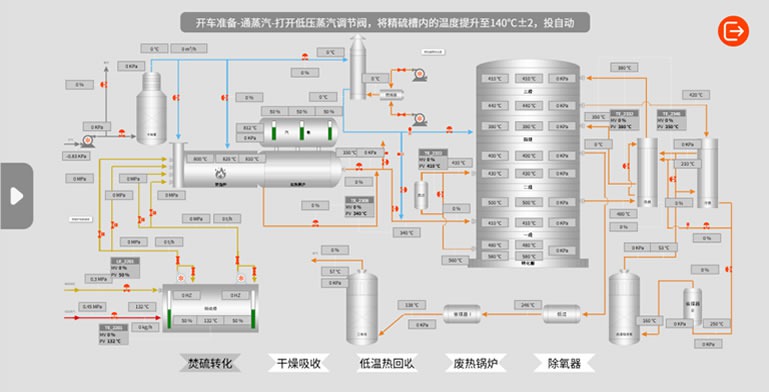
Practice Mode - Sulfur Incineration Conversion
In terms of operation interaction, the system provides intuitive process guidance and fully replicates PID control.
· On the left side of each flowchart, there is a step prompt bar, providing clear and real-time operation instructions to dynamically guide users to complete the next operation; the top status area simultaneously displays the current operation stage, helping users keep track of the task progress and system status throughout the process.
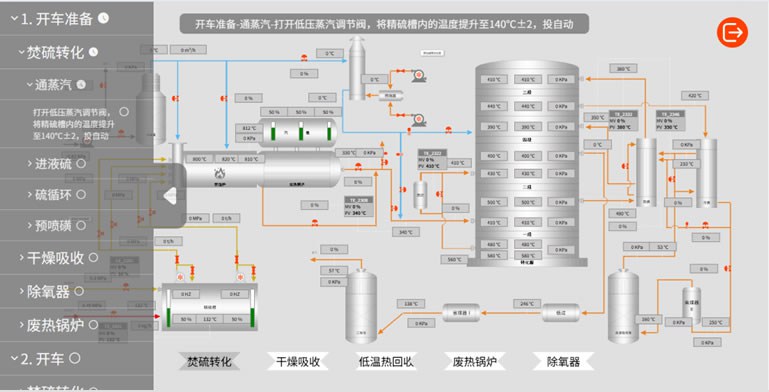
Practice Mode - Sulfur Incineration Conversion 2
Clicking any valve or PID control point will display the corresponding operation panel, supporting common functions such as adjusting opening degree, performing on/off operations, and switching between automatic/manual modes. Additionally, clicking any device in the diagram reveals its design parameters, enabling customized configurations to meet diverse user needs. The built-in equipment knowledge card feature helps trainees quickly develop systematic understanding of process equipment.
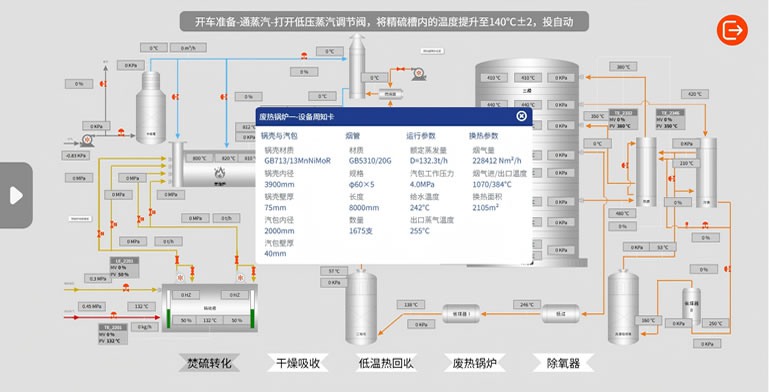
Equipment Information Card
In terms of functionality, the system offers three core modules: practice mode, examination mode, and fault handling.
· The practice mode covers various scenarios such as cold start-up, hot start-up, short-term shutdown, and long-term shutdown (additional single-section start-up and shutdown scenarios can be added based on requirements). Each scenario is equipped with 5 or more operation snapshots and automatic backup functions. Users can select any snapshot from the external interface at any time to quickly return to the current operation state, achieving efficient re-practice. Additionally, the practice mode has a time recording function, which can display the cumulative study hours of the trainees.
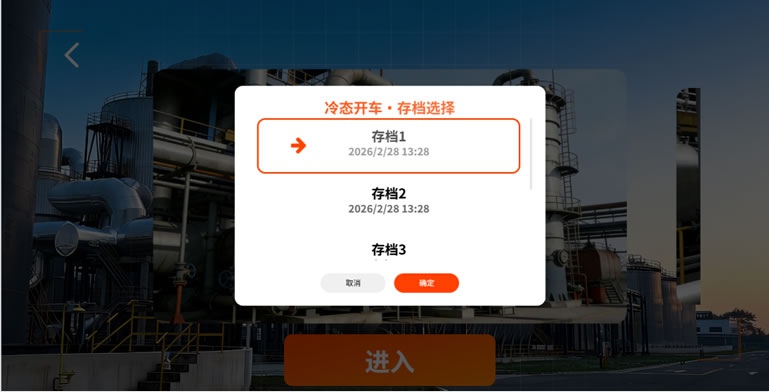
Archival Retrospective
The examination mode is conducted in a closed environment, where all user operation behaviors are recorded throughout the process, and intelligent scoring is carried out based on an original scoring mechanism. After the examination, a clear and structured analysis report is provided, precisely identifying the weak points in the operation, helping users quickly master the key steps and difficulties.
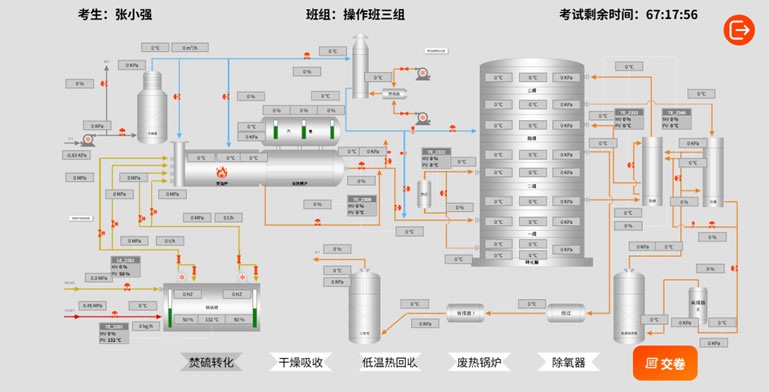
Exam Mode - Sulfur Combustion Conversion
The fault handling mode incorporates user-defined common operation fault scenarios, and can also realistically reproduce typical fault cases from the history of the sulfuric acid plant. This helps operators immerse themselves in the process of reviewing the accident, thereby enhancing their ability to identify abnormal conditions and handle emergencies.
Conclusion
Deeply engage in independent research to uphold the original aspiration, and empower with technology to embark on a new journey. We will always adhere to the concept of independent innovation, delve deeply into the research and development of core technologies, and lay a solid foundation for the high-quality development of enterprises, jointly building the blueprint of the industrial digitalization ecosystem.
Looking forward to the future, we will continuously iterate and optimize the OTS system to create digital solutions that are in line with the real application scenarios of the industry. With mature and complete technical strength and service capabilities that are tailored to the scenarios, we will embark on a new chapter of industrial digital transformation.